THE FIRST
Castle
Chapter II

The noble family from Aosta, Porta Sancti Ursi, moved to the castle of Quart, marking the beginning of the Lordship of Quart and a new phase of growth. Having become feudal lords of the Savoy, the house inherited the dominions of the Lords of Oyace in Valpelline. After various debts, in 1377 the historic Quart lineage died out, leaving the Savoy with an enormous wealth accumulated in almost three centuries of power.
notifications
Info
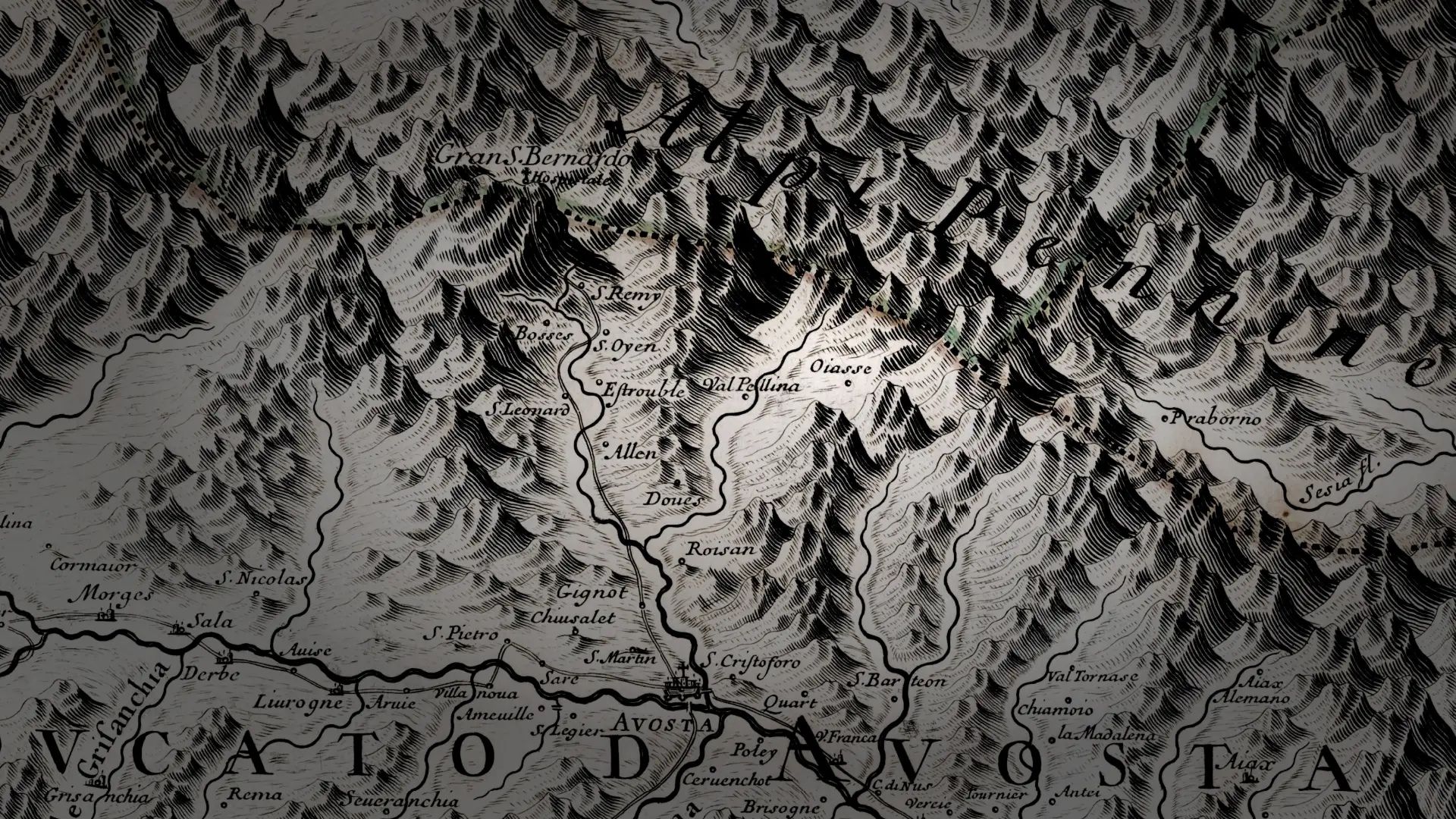
Cartographic view of the Duchy of Aosta dated 1691.
A cartographic representation dated 1691 of the western part of the Aosta Valley. Coming up from the central position of the city of Aosta, it is recognizable near the village of Roisan, the beginning of the Valpelline basin and the town of Oyace, near the border with the Swiss Valais.
2.1
EXPANSION AND DECLINE
After the extinction of the rural house of the Lords of Oyace, the Savoy ordered their castle to be dismantled. The de Porta Sancti Ursi, who became Lords of Quart, acquired many properties in Valpelline, including the octagonal tower of Ayacy.
The probable reconstruction of the castle in the fortified settlement of Quart, around 1185, by the Porta Sancti Ursi family of Aosta —Lords of Quart— testifies to the desire of the family to extend their possessions along the axis of the Buthier stream to the Alpine slope of Valpelline. The construction of the castle is therefore linked to the consolidation of territorial powers with a view to judicial affirmation, also given by the close ties with the Aosta and Swiss episcopal powers. The simultaneous construction of the castle of Ayacy (Oyace) and its octagonal tower (1187), later inherited from the extinction of the Lords of Oyace, is therefore part of this strategic trend of occupying the land of the valley. In 1252, the Count of Savoy Amedeo IV officially celebrated the feudation in favor of Jacques de Quart. The simultaneous construction fervor in the Alpine region also testifies to an intense contact between local families and specialized workers, “the magisters cementarius”, who worked for the Savoy on all the military structures in their domains, bringing peculiar construction systems to the construction sites that can be found transversely in the Aosta Valley towers of Châtel-Argent, Montmayeur, Bramafam, Tourneuve and Brissogne. Perhaps for a strategic revision of the regional balance linked to the vassalages, the Savoy demand the dismantling of the 'castrum de Ayacy', effectively asking for the demolition of the Oyace site. Probably, the tower is spared.
AYACY AESCI OYCE OYACY
deepening
Info
Various documents cite Oyace with the variable toponyms of Ayacy, Aesci, Oyce, Oyaci, Oiasse. A 1197 document also mentions the fortified area as the subject of a land donation addressed to the church of Sant'Orso di Aosta. On the territory of Ayacy, written testimonies certify the payment of tributes to the original local lords and their probable dependence on vassallatic ties, perhaps precisely with regard to the Aosta family of Porta Sancti Ursi, future owners of the tower and other extensive properties in Valpelline.
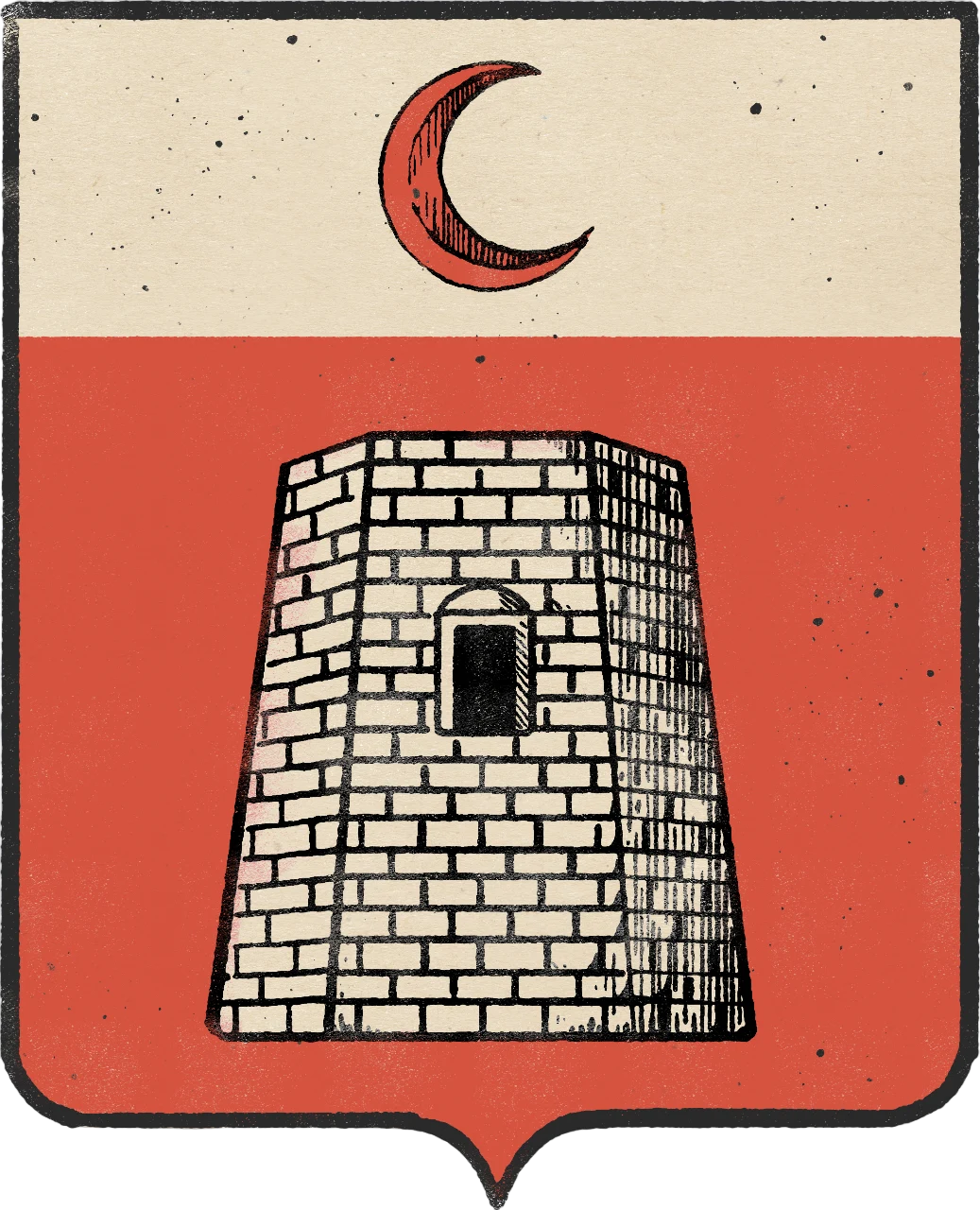
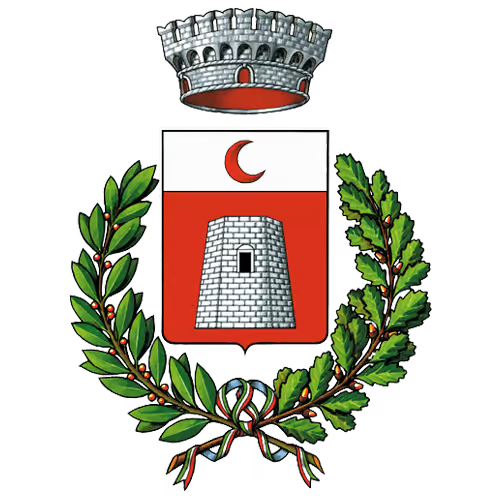
Interpretation in the form of an emblem of the current banner of the City of Oyace.
2.2
Two Centuries of Power
After the extinction of the rural house of the Lords of Oyace, the Savoy ordered their castle to be dismantled. The de Porta Sancti Ursi, who became Lords of Quart, acquired many properties in Valpelline, including the octagonal tower of Ayacy.
1187
The lords of Oyace built the castle of Ayace by erecting a characteristic octagonal tower.
1197
The castle of Oyace is formally mentioned in a document certifying a land donation. In the following decades, perhaps for reasons of political antagonism, the fortification was dismantled by order of the Savoy
1252
The Aosta family of Porta Sancti Ursi, Lords of Quart, is in fief by Count Amedeo IV of Savoy. Their territorial heritage includes the domain of Oyace and other possessions in Valpelline, including the towns of Douses, Ollomont and Bionaz.
1288
The lords of Quart become debtors of Count Amedeo V of Savoy. To settle the payments, they are forced to pledge the castles of Quart, Brissogne, the family safe of Aosta and the proceeds of the Oyace site.
1377
With the death of Henry De Quart, the historic noble family died out. Their impressive land estate, extended even beyond the border with Switzerland, was acquired by the Savoy.
After the extinction of the rural house of the Lords of Oyace, the Savoy ordered their castle to be dismantled. The de Porta Sancti Ursi, who became Lords of Quart, acquired many properties in Valpelline, including the octagonal tower of Ayacy.
Castles, towers and strongholds become a widespread form of control over valleys.
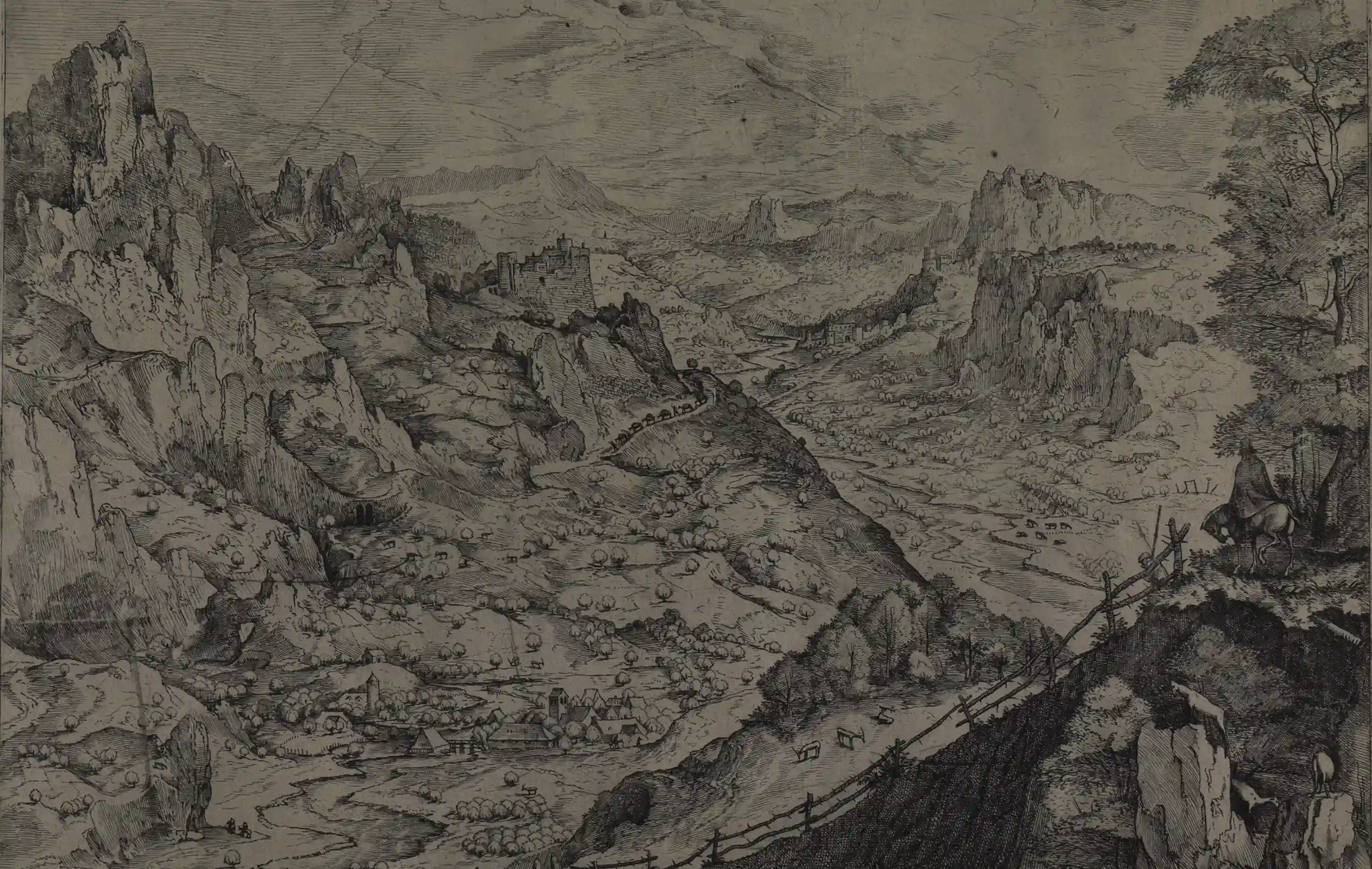
The original Castro
Ayacy
Lords of Oyace
The only survivor of the decline
deepening
Info
Given the limited availability of building space on the promontory, it is likely to believe that the castle of the Lords of Oyace was built developing a fortified structure in the opposite direction from the tower, probably about a hundred meters inside the current forest. The wall could therefore be divided into at least two access doors, separating the tower area from the purely residential area. Unfortunately, information on the rural house of Oyace is extremely limited: in fact, no evidence has arrived of the appearance of the original fort nor is their family coat of arms known after the extinction of the lineage.
The rise of the powerful French house of the Savoies—interested in consolidating its jurisdiction and expanding into new territories—will radically influence the region's balance of power, creating political conflicts, alliances and military conflicts.
A valley torn between domination and resistance. The Savoy impose their control, while the ancient local houses fight for survival. Castles and towers become symbols of power in a silent war made up of alliances, betrayals and conquests.

The tower of
Ayacy
Chapter III
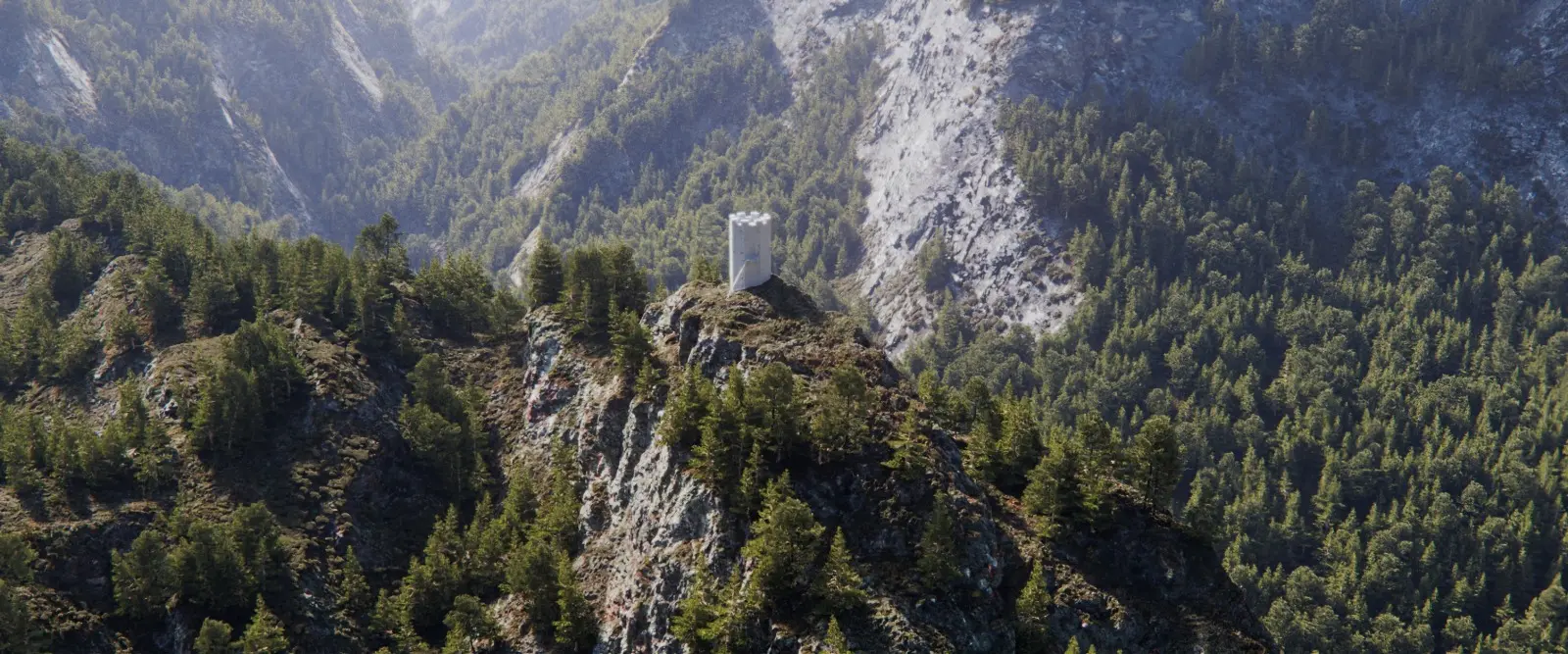
Derived from the silver section, it stands alone and proud above the rock like a geometrically artificial peak: it is the turnalla. Eight sides, with a view of all border roads. It is a structure, but also a sentinel, a monument of Valpelline, a unique case study in terms of historical and architectural value.
3.1
SENTINEL SYMBOL
Between the end of the 12th and the middle of the 13th century, the Aosta Valley was the scene of struggles for control of the territory, in an era of demographic expansion and economic growth. Castles and towers become tools of strategic domination, symbols of noble power and of the growing influence of the Savoy.
In a strategic region such as the Aosta Valley, on the border of France, Switzerland and Italy, the clash of power in the administration of the territory mainly concerns the conflictual relationship between land possessions, historically affected by overlapping powers and property disputes, in particular between the Count of Savoy, the Visconti (i.e. the local families representing the Count) and the influential bishop of Aosta. The perpetual climate of administrative friction generates relational repercussions in the valleys characterized by contrasts and favouritism based on the factions of the relative noble families interested in visibility and protection. A climate of antagonism, the rural family of the Lords of Oyace, the first owners of the tower, and then the historic urban house Porta Sancti Ursi of Aosta —future owners of the domains in Valpelline—, are identified as subjects close to the sphere of ecclesiastical influence of Aosta, in potential conflict with the desire for hegemony of the Savoy and their subject vassals. In 1191, with the drafting of the “Franchise Charter”, the Savoy formalized actions of political marginalization, especially against the bishop's vassals, including the Lords of Oyace and members of the De Porta Sancti Ursi family. In addition to the central headquarters in the city, the tower of Porta Sant'Orso (built on the structures of the Porta Praetoria, the most important in the Roman city), the family held a large land estate in the territory of Quart, the future headquarters of the Signoria, and in Valpelline (then the Valley of Eacy) where the tower of Oyace stands, extending with property even beyond the Alps, in the Swiss district of Entremont.
Technical Description
Octagonal figure
structure
Artificial but created from rock
deepening
Info
The octagon, a form universally known in the Middle Ages and constant in various religious or military architectures, connected to sacred buildings, comes from Hellenistic culture and, in the Roman imperial era, appears in monuments and towers to defend the entrance doors or the surrounding walls. With the advent of Christianity, the octagonal motif is inextricably linked to the baptistery, a structure with a specific function. The symbolism of eight, linked to the rite of Resurrection, underlies the concept of rebirth and purification, also found in mausoleums. The baptismal tub and water materialize the purification of body and spirit, assuring eternal life to believers. The link between geometric figure and rite, first in Romanesque architecture and then in Gothic architecture, reached a high level of compositional research, giving rise to architectural excellence.
CONSTRUCTION MATERIAL
LOCAL ROCK
3.2
Structure
Octagonal profile, 12 meters high, raised access, brick-clad top, battlements, integrated latrine and construction details define a unique and innovative fortified structure among the oldest known in Western Europe.
In a strategic region such as the Aosta Valley, on the border of France, Switzerland and Italy, the clash of power in the administration of the territory mainly concerns the conflictual relationship between land possessions, historically affected by overlapping powers and property disputes, in particular between the Count of Savoy, the Visconti (i.e. the local families representing the Count) and the influential bishop of Aosta. The perpetual climate of administrative friction generates relational repercussions in the valleys characterized by contrasts and favouritism based on the factions of the relative noble families interested in visibility and protection. A climate of antagonism, the rural family of the Lords of Oyace, the first owners of the tower, and then the historic urban house Porta Sancti Ursi of Aosta —future owners of the domains in Valpelline—, are identified as subjects close to the sphere of influence in the tower of Porta Sant'Orso (built on the structures of the Porta Praetoria, the most important in the Roman city), the family held a large land estate in the territory of Quart, the future seat of the Lordship, and in Valpelline (then the Valley of Eacy) where the tower of Oyace stands, With property also beyond the Alps, in the Swiss district of Entremont.
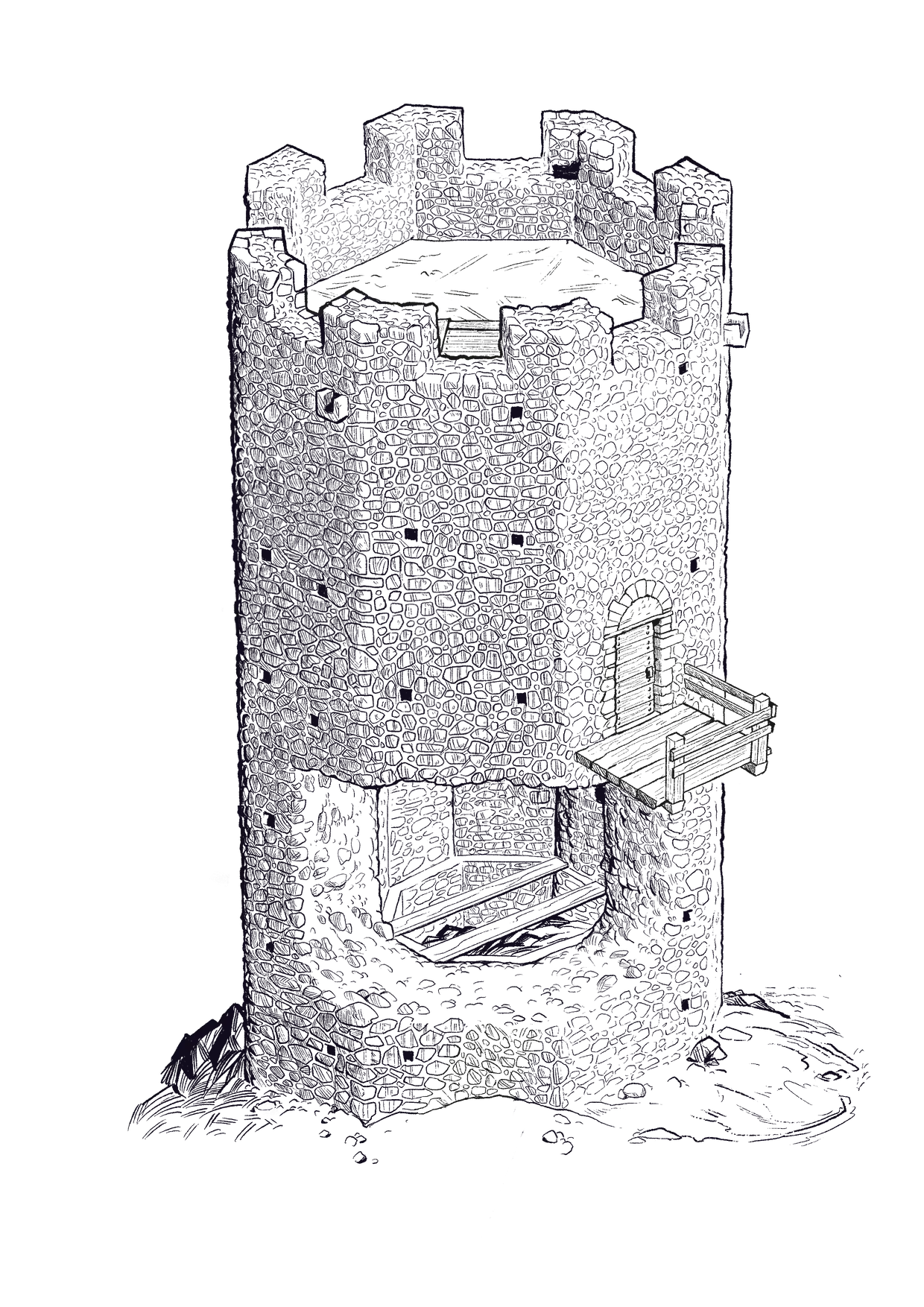
GROUND FLOOR
At the base, in the first room, the floor area is 9.35 m2, while the height did not exceed 3.30 m. This level could only be served by a wooden staircase through a gap in the floor of the upper floor and used as a warehouse under the access door.
00
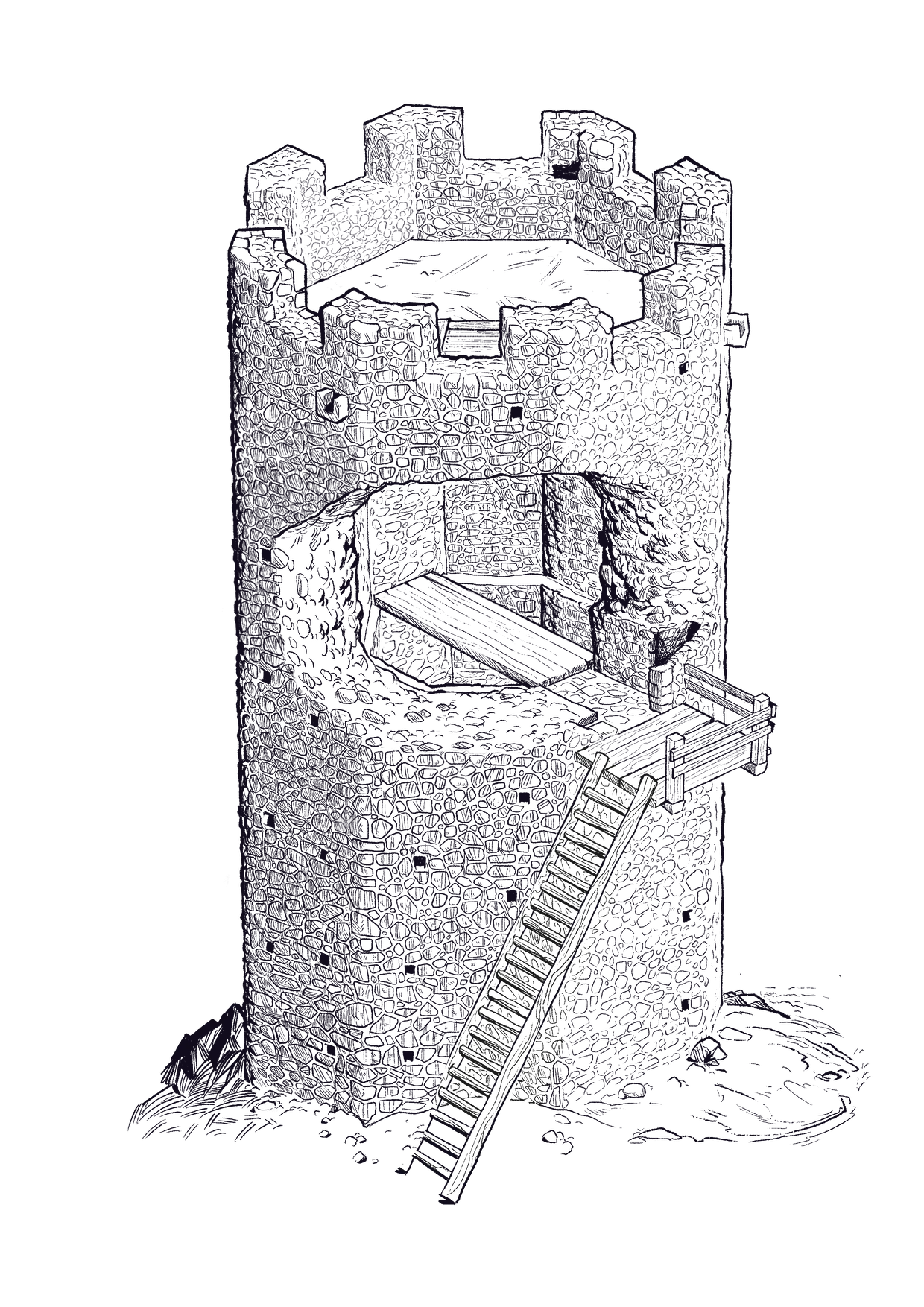
FIRST FLOOR
The upper floor was the access room to the tower with a floor of 11.37 m2, to which was added 1.44 m2 of the entrance opening carved into the thickness of the walls, and a height development of just under 3 m. The front door (H 190 x W 80 cm) is located in the center of the south-facing side overlooking the Valley, in the direction of Aosta.
01
.webp)
SECOND FLOOR
The last level has a floor area of more than 13 m2. Its reduced height (about 2 m) characterizes its function as an intermediary compartment between the entrance and the top of the tower. Even this space, without loopholes, had to include a hatch, accessible via a wooden staircase, which allowed us to reach the top of the tower.
02
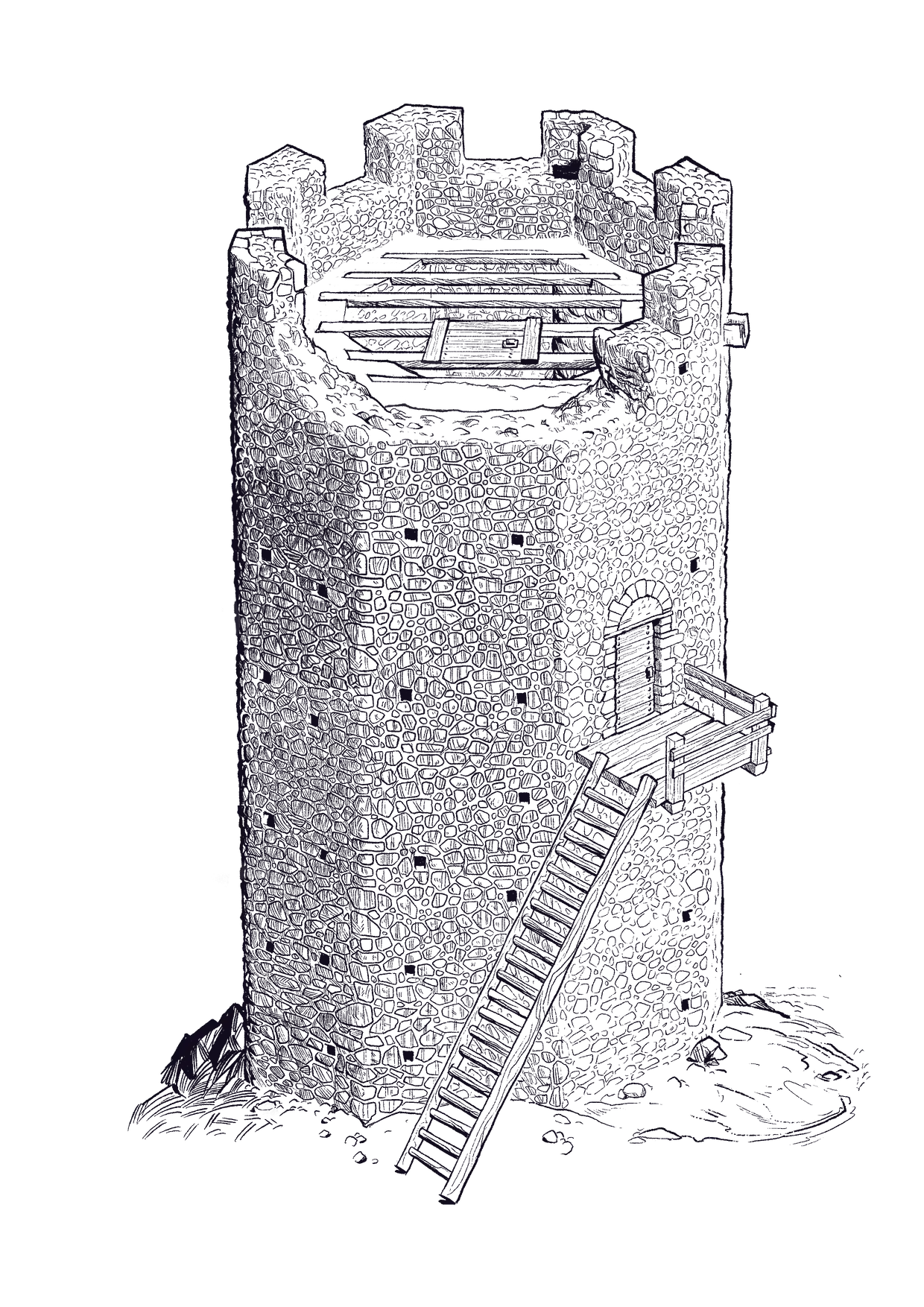
TOP FLOOR
The particular function of the top attic is demonstrated by the unique choice of placing six wooden beams to support the floor, despite the same floor area (about 13 m2) as the lower room. For access to this level, you can imagine the presence of a hatch, recessed at the highest point of the inclined surface for the entire thickness of the floor. The blackbirds, if they existed, had to insist on each of the edges and rise about 1 meter.
03
A valley torn between domination and resistance. The Savoy impose their control, while the ancient local houses fight for survival. Castles and towers become symbols of power in a silent war made up of alliances, betrayals and conquests.
3.3
WHY OCTAGONAL
The octagon represents a form universally known in the Middle Ages and a constant in various religious or military architectures: connected to sacred buildings, it comes from Hellenistic culture and then in the Roman imperial era it appears as a motif in various monumental buildings and is used in towers to defend the entrance doors or in the surrounding walls.
The desire to adopt the geometric shape of the octagon at the construction level constitutes a planimetric choice that accentuates the executive complexity of the project, especially considering the altimetric properties and the irregular morphology of the rocky promontory of Oyace. Placing the analysis of the construction system in the medieval chronological and geographical context, the lathe takes on the singular character of an architectural anomaly, interpreting the geometric motif as a factor of originality or, even, as the expression of a sign from the second half of the thirteenth century, the presence of octagonal towers is gradually replaced by circular fortifications, there are cases where the use of polygonal forms becomes an exercise of methodical constructive knowledge and a phenomenon of aesthetic research and imitation. transversal in various territories and cultures. In addition to being a characteristic of Christian religious architecture, in particular for baptisteries, the use of octagonal planimetry finds important examples in the field of military buildings with cardinal examples in the Tour de César (Provins), the nearby tower of Vex (in Swiss Valais, known for its similarity with Oyace), the octagonal tower of Chivasso and the tribal affiliation of a community. In the territories under the rule of the Savoy, the use of octagonal towers is documented in the Castle of Saint Georges d'Esperranche (Isère-Rhone-Alpes), built by Philip I of Savoy between 1268 and 1274 with four octagonal towers at the corners: this would seem to constitute the only other example of this planimetric form during the thirteenth century within the Savoyard territories, thanks to the master builder Magister Iacobus de Sancto Georgio, known as Master James, later operating in the Savoy county and later in Wales under the orders of King Edward I.
notifications
Info
Reconstructed architectural visualization
Of the Tower of Oyace
The rise of the powerful French house of the Savoies—interested in consolidating its jurisdiction and expanding into new territories—will radically influence the region's balance of power, creating political conflicts, alliances and military conflicts.Raggiungila.
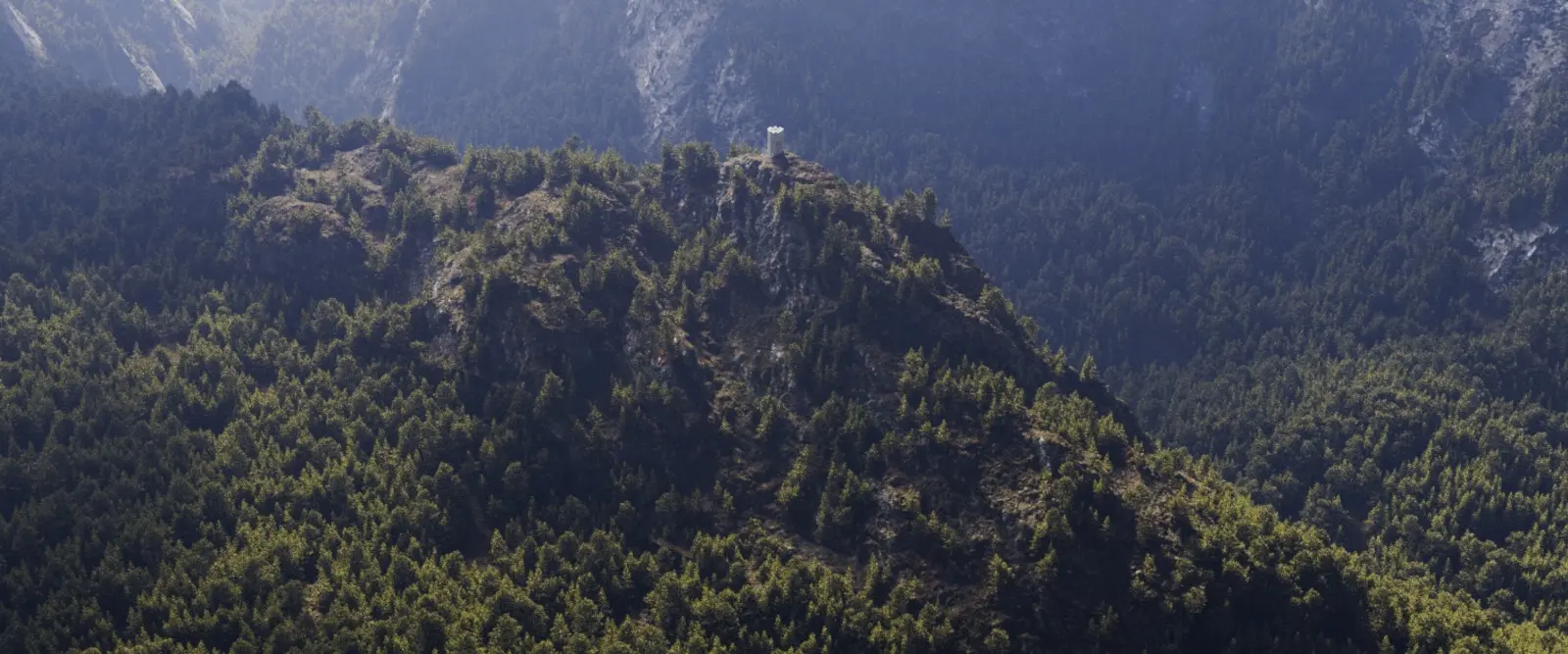
La torre è tuttora visibile e raggiungibile attraverso un breve sentiero immerso nei boschi, proseguendo poco dopo il Municipio di Oyace.
A valley in
Discord
Chapter I
During the Middle Ages, the Alpine region now known as Valle d'Aosta represented a cross-border area of extraordinary strategic importance. Located on the border between Italy, France and Switzerland, the valley was controlled by several families of the local rural nobility divided into rival factions.
1.1
Dominance and control
To strengthen power over the territory, some houses build towers and fortifications, sometimes in agreement and sometimes in contrast with the Savoy hegemony. Pastures, crops and land properties become strategic assets and the presence of these buildings certifies in a material sense the possession of a stately district.
Between the end of the 12th and the middle of the 13th century, Europe witnessed a period of population growth associated with a favorable climate. A strategic territory for the transalpine borders, the Aosta Valley region is characterized by power disputes between different noble factions. In this phase of socio-economic development, local aristocratic families suffer significant property fractions due to the branching of lineages and growing conflicts with the rule of the Savoy dynasty, determined to increase legal authority and control of the Aosta Valley region through a widespread regime of vassalage and submission. The conquest of large agricultural areas and pastures, even at high elevations, represents a strategic priority in order to guarantee land ownership, opportunities for expansion and high incomes. Castles and towers become a widespread form of control over the valleys, characterizing themselves as a favorite expression of the power of the rural nobility of the Valley with a strong symbolic, political and social meaning.
notifications
Info
Title:
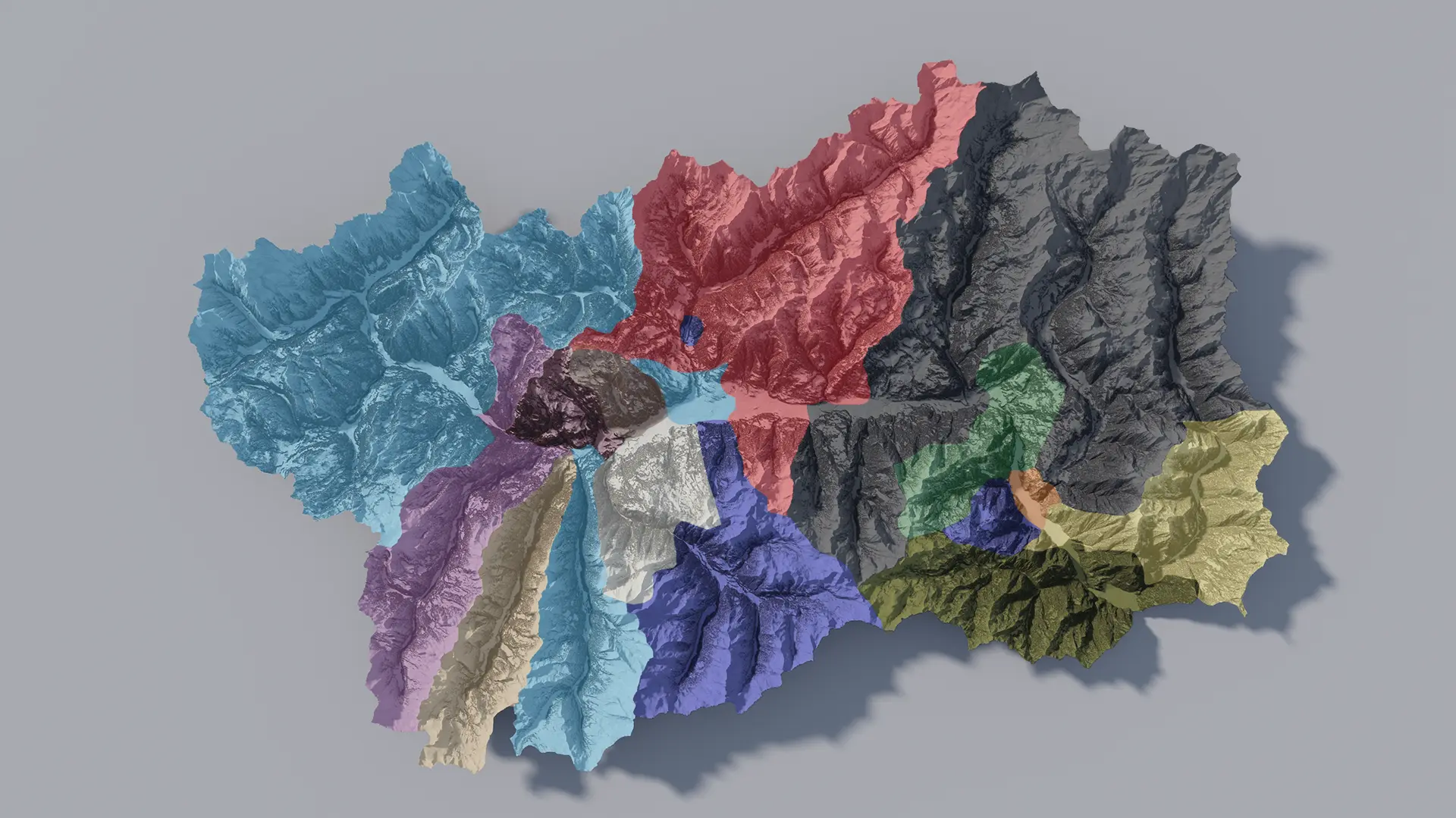
An illustrative map of what the geographical area of the current Aosta Valley might have looked like in the 30th century, with the territories and valleys administered by the respective local noble families. Originally a marginal part of the territories included in the County of Savoy, in the following two centuries the region will be almost entirely subject to the direct control of the Savoy family.
place:
Oyace, Aosta Valley, Italy
Altitude:
1100-1400 meters
INHABITANTS:
200+
Agriculture and mountain life
deepening
Info
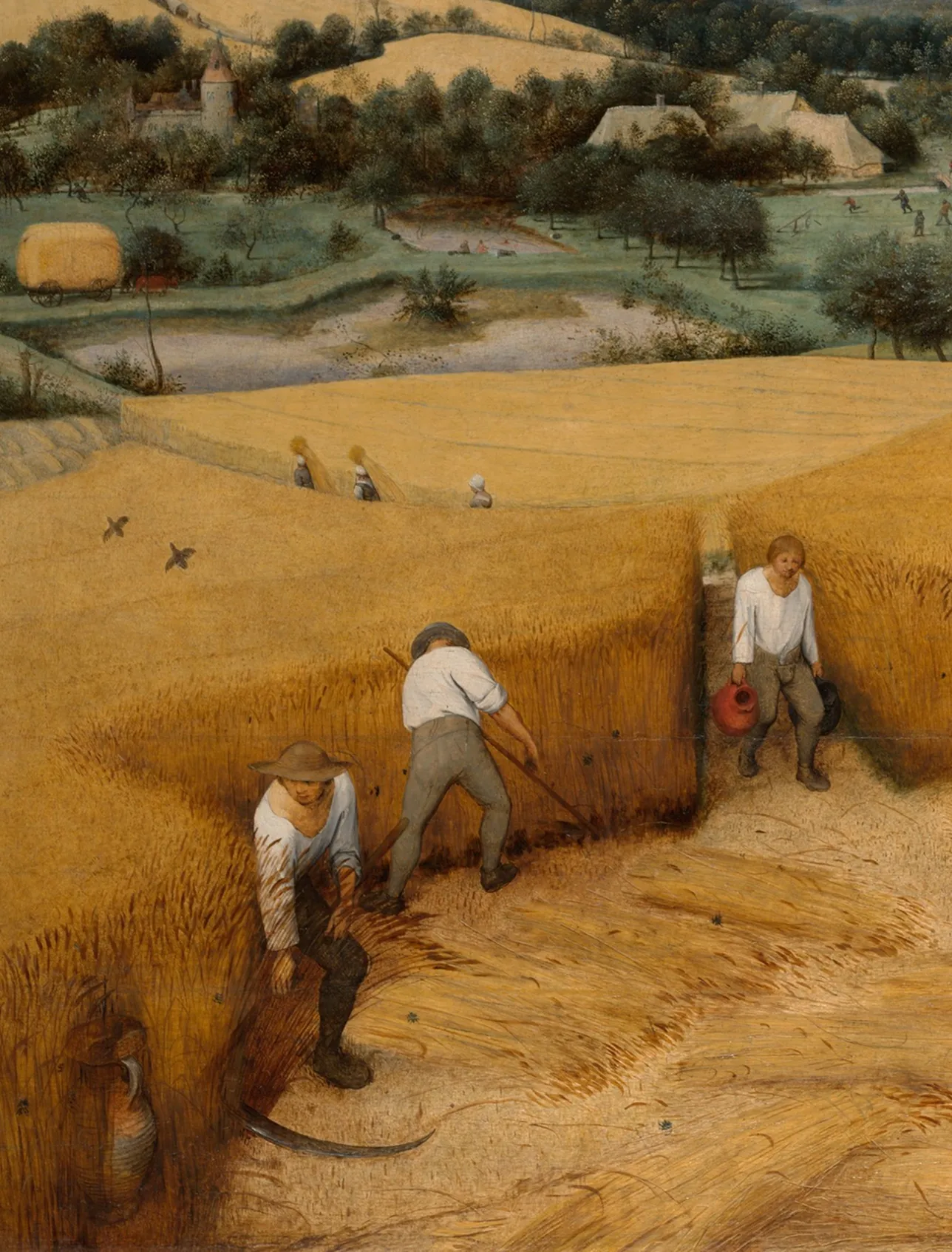
For reasons of altitude and reduced sun exposure, the crops of the Valpelline communities housed almost exclusively rye fields and, secondarily, oats and barley. Very rarely, and only in the presence of mild seasons, was it perhaps plausible to support the maturation of a modest quantity of wheat.
1.2
CONTESTED POWERS
The conflicting relations between the various houses and the Savoy alter power relations, leading to discrimination and favouritism. Among the local nobility, I De Porta Sancti Ursi of Aosta, who became Lords of Quart, emerge as a particularly important family, building relationships also with the episcopal power.
In a strategic region such as the Aosta Valley, on the border of France, Switzerland and Italy, the clash of power in the administration of the territory mainly concerns the conflictual relationship between land possessions, historically affected by overlapping powers and property disputes, in particular between the Count of Savoy, the Visconti (i.e. the local families representing the Count) and the influential bishop of Aosta. The perpetual climate of administrative friction generates relational repercussions in the valleys characterized by contrasts and favouritism based on the factions of the relative noble families interested in visibility and protection. A climate of antagonism, the rural family of the Lords of Oyace, the first owners of the tower, and then the historic urban house Porta Sancti Ursi of Aosta —future owners of the domains in Valpelline—, are identified as subjects close to the sphere of ecclesiastical influence of Aosta, in potential conflict with the desire for hegemony of the Savoy and their subject vassals. In 1191, with the drafting of the “Franchise Charter”, the Savoy formalized actions of political marginalization, especially against the bishop's vassals, including the Lords of Oyace and members of the De Porta Sancti Ursi family. In addition to the central headquarters in the city, the tower of Porta Sant'Orso (built on the structures of the Porta Praetoria, the most important in the Roman city), the family held a large land estate in the territory of Quart, the future headquarters of the Signoria, and in Valpelline (then the Valley of Eacy) where the tower of Oyace stands, extending with property even beyond the Alps, in the Swiss district of Entremont.
Amadeus VI
Amadeus IV
Thomas I
Umberto I

1134
1197
1178
980
Said of the Green Count, faithful to the King of France, he fought against England, the Turks and the Bulgarians. In the Aosta Valley, he acquired the property of the Lords of Quart after the extinction of their lineage.
The eldest son of Tommaso I, he feuded the noble Aostan family of De Porta Sancti Ursi on the territory of Quart and Valpelline.
In 1191 he granted the Franchise Charter to the inhabitants of Aosta and negotiated with the local episcopal power the municipal limits on the valley.
Founder of the Savoia family, known as Biancamano, he was Count of Moriana, Belley and Aosta.
1383
1253
1233
1056
place:
Altitude:
INHABITANTS:
From Porta Sancti Ursi
deepening
Info
The original founder of the future family of the lords of Quart and then of Verrès, is estimated to be Pierre de Porta Sancti Ursi, mentioned in documents between 1100 and 1125. The replacement of the original patronymic to “de Quart”, and the construction of the structure embedded in the homonymous fief reflect the difficulties encountered by the family in the city environment, the marginalization of the episcopal power over the political hegemony of the region, and the family's will to directly control the immense land assets owned. The settlement in Quart led the family to build the castle towards the end of the 11th century and to move there permanently, leaving Aosta, towards the end of the 12th century, inaugurating the Castro as the official seat of the Lordship and boasting a network of vassals invested in towers and lands. In 1378, when the lineage was extinct, the domains of Quart and Valpelline came under the full jurisdiction of the Savoy.
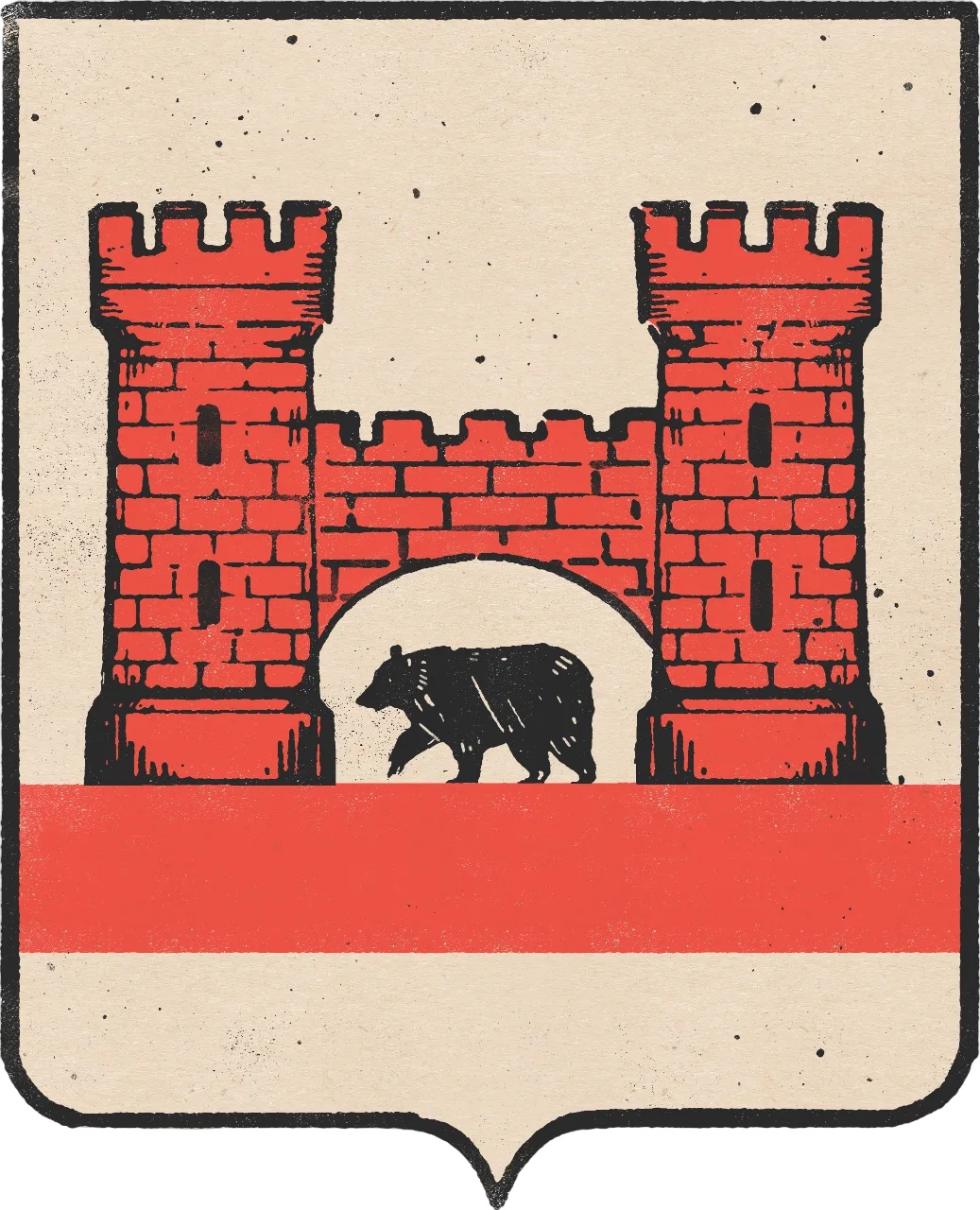
Lo stemma familiare dei De Porta Sancti Ursi.
The rise of the powerful French house of Savoy, interested in consolidating its jurisdiction and expanding into new territories, will radically influence the balance of power in the region, creating political conflicts, alliances and military conflicts.
A valley torn between domination and resistance. The Savoy impose their control, while the ancient local houses fight for survival. Castles and towers become symbols of power in a silent war made up of alliances, betrayals and conquests.

Lordship of Oyace AD 1187
Oyace, Aosta Valley - 45°51′00.65″ N 7°23′10.47″ E

The Valpelline Sentinel
Explore


.svg)



A valley in discord
The first castle
Ayacy's Tower



In the 12th and 13th centuries, local lords and Savoy contested Aosta Valley, where towers and castles symbolized power in a transforming territory.
Where today only the ruin of an octagonal tower can be seen, once stood the castle of the Lords of Oyace, a rural house in Valpelline.
Octagonal profile, raised access, brick roof and careful construction details define a unique and innovative fortification.

OCTAGONAL SENTINEL
1/11
Built in 1187, the Ayacy tower is the only octagonal defensive structure in the Aosta Valley. Built at an altitude of 1477 meters above sea level in the center of the Valpelline valley, it allowed formidable control over the area up to the border with Switzerland.
DEFENSIVE OBSERVATION
2/11
Built in a dominant position above a rocky ridge, the turnalla is spread over four levels, with 3 internal rooms and a summit part with an observational function located more than 12 meters above the ground.
WALL TAPE
3/11
Originally, a deterrence wall protected the area surrounding the tower, extending to the edge of the promontory. A sturdy door, positioned in an asymmetric orientation, allowed access control and increased defensive capabilities, hindering a potential frontal attack.
Arcatura
4/11
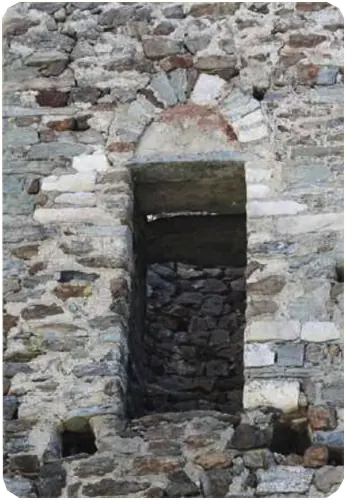
The blind arch above the lintel housed a perfectly smooth stretch of reddish plaster obtained from brick powder mixed with lime. The resulting surface could house decorations or the coat of arms of the owning family.
Overhead access
5/11
Located six meters high, the only access door to the tower was accessible only with a stepladder or a rope solution. In the event of an enemy attack, this condition made the tower inaccessible.
Privy
6/11
Made from the cutout of a battlements, the latrine allowed the sentinels to be used functionally during prolonged patrols. The unusual location, outside the premises, represents an avant-garde design choice, highlighting a particular attention to hygiene conditions.
COVER
7/11
A layer of cocciopesto, a building material obtained from a mixture of brick and lime, completely covered the surface, making it waterproof and, thanks to a calculated slope during installation, made it easier for rain to flow to the gargoyles.
Botola
8/11
The summit area, with a view of the entire valley, was accessible from a hatch connected to the lower rooms through at least two passages and related stairs placed between the immediate floor below, with a simple passage, and the actual level of the entrance door.
EXTENDED CONTROL
9/11
From a morphological point of view, the rocky height chosen for the tower constitutes a powerful natural barrier positioned right in the center of the entire Valpelline valley, ensuring excellent visibility.
THE BUTHIER STREAM
10/11
More than two hundred meters lower, among the steep rocky creeks below, flows the Buthier stream. Crossing the historic Betenda bridge, at the base of the promontory, the watercourse grows along the entire valley until it flows into the Dora Baltea, near the city of Aosta.
octagon
10/11
The octagon represents a form universally known in the Middle Ages and a constant in religious and military architecture: connected to sacred buildings, it comes from Hellenistic culture and became a motif in various monumental buildings, then found use in towers to defend access doors and walls.


A valley in discord
The first castle
Ayacy's Tower


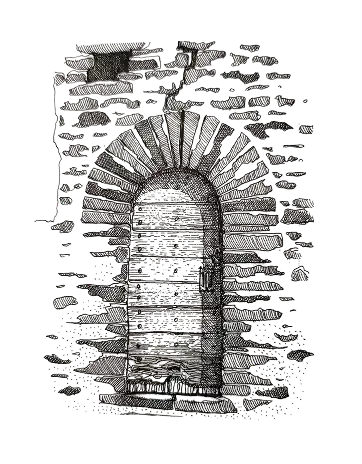
TOWER GATE
The front door, located in the center of the south-facing side, is partly the result of a restoration at the end of the 19th century. However, some original elements are recognized that characterize its particular executive refinement. Only in the little stones and in the arch that dominates the lintel, are rather regular blocks in crystalline plaster with a typical white color, the result of an accurate